Your Corpus Is Lying to Your Model
When an AI system gives a confidently wrong answer, everyone audits the model. Almost no one audits what you fed it. The failure is usually in the corpus — and corpus quality is measurable.
When an AI system gives a confidently wrong answer, everyone looks at the model.
They tune the prompt. They swap in a bigger model. They add a reranker, a guardrail, an eval harness. They do everything except look at the one thing that actually caused the failure.
What you fed it.
The uncomfortable truth of enterprise AI is that most failures aren’t model failures. They’re context failures. The model did exactly what it was supposed to do — it faithfully reflected a corpus that was contradictory, stale, unattributable, or quietly duplicated across a dozen near-identical documents. Garbage in didn’t produce garbage out. It produced something far more dangerous: fluent, confident, plausible garbage out.
Garbage in didn't produce garbage out. It produced something far more dangerous: fluent, confident, plausible garbage out.
The substrate nobody audits
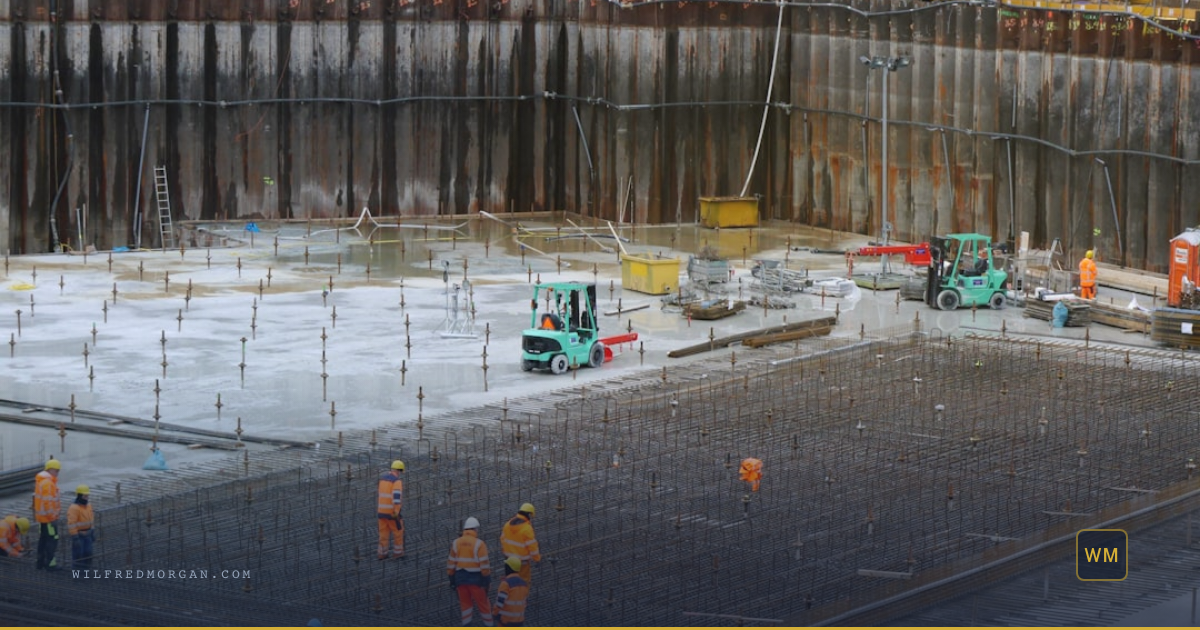
Every retrieval-augmented system, every agent with a knowledge base, every copilot grounded in “your documents” rests on a corpus. That corpus is the substrate the entire system stands on. And almost no one measures its quality before they build on it.
Think about what that means. Teams will spend six figures on model evaluation, red-teaming, and observability — and zero on the question of whether the documents feeding the whole thing agree with each other.
Teams will spend six figures on model evaluation — and zero on whether the documents feeding the whole thing agree with each other.
They don’t. They almost never do. Two policy docs make opposite claims about the same rule. A term means one thing in the onboarding guide and something subtly different in the API reference. A “current” compliance document is nine years stale. The model can’t fix any of that. It can only launder it into an answer that sounds authoritative.
What "corpus quality" actually means

Here’s the shift that changes how you build: corpus quality isn’t a vibe. It’s measurable, along specific dimensions. When I built the Context Architecture Blueprint, I made those dimensions explicit — seven of them — because you can’t fix what you can’t name:
Cross-document consistency — do your documents agree, or do they quietly contradict each other?
Attributability — can every claim be traced back to a source, or does provenance dissolve on contact?
Extractability and structure — is the content shaped so a machine can actually parse it, or is it a wall of PDF?
Metadata and provenance — do you know where each document came from and whether it’s authoritative?
Freshness and versioning — is this the current truth, or a fossil that outranks the current truth?
Redundancy and uniqueness — is the same claim duplicated across a dozen files, so retrieval keeps surfacing noise?
Terminology consistency — does one word mean one thing across the whole corpus, or does the vocabulary drift?
Every one of those is a failure mode I’ve watched sink a system that had a perfectly good model behind it. And every one of them is invisible until you measure it — at which point it becomes obvious, and fixable.
The cheapest failure to prevent
The contradiction between two documents that a human would never think to compare is the single most expensive thing in a knowledge base, because the model will pick one at random and defend it. The stale document that outranks the current one is a lawsuit waiting for the right query. The term that drifts is a slow leak that erodes trust one answer at a time.
None of these get caught by testing the model. All of them get caught by grading the corpus — before you build on it.
That’s the entire premise of the Context Architecture Blueprint. Point it at your corpus and it scores those seven dimensions, flags the contradictions by name, and bands the whole thing on a maturity scale so you know whether you’re standing on bedrock or sand. It’s free, and the engine is open source, because a standard nobody can inspect isn’t a standard.
Before you trust an AI system, trust its foundation. Then verify it.
The Context Architecture Blueprint scores your corpus against these seven dimensions and flags the contradictions by name. It’s free, and the engine is open-source — a standard nobody can inspect isn’t a standard. Grade your corpus →
Wilfred Morgan
AI Systems Architect · Agentic AI Implementation